When Central Texas weather turns from blazing sun to sudden hail and high winds, your roof is the first and most important line of defense. Choosing a trusted, local roofing professional ensures your home or business gets solutions that stand up to harsh UV, thermal expansion, and powerful storm fronts. A seasoned Cedar Park roof contractor understands regional building codes, neighborhood HOA expectations, and the roofing systems that deliver long-term value across Williamson County and the Austin metro. With the right partner, you can expect responsive inspections, precise repairs, durable replacements, and maintenance plans designed to prevent costly surprises.
Local Roofing Expertise That Withstands Heat, Hail, and High Winds
Central Texas roofs battle a unique combination of threats: triple-digit heat, intense UV exposure, spring hail, and seasonal wind events that can tear at shingles and flashing. A local expert doesn’t guess at these conditions—they build for them. That means recommending assemblies with heat-reflective surfaces, impact-resistant materials, and reinforced fastening patterns that help your roof ride out turbulent storms. It also means selecting underlayments and sealants engineered for high temperatures so they don’t prematurely fail in Cedar Park summers. The result is a roof that performs on day one and holds its integrity year after year.
Beyond weather, a knowledgeable contractor navigates the details that matter in Cedar Park, Leander, Round Rock, Georgetown, and nearby communities. From permitting in Williamson County to wind-uplift requirements and HOA architectural guidelines, you get a compliant, stress-free project timeline. You also benefit from streamlined insurance coordination following hail and wind claims. An experienced pro knows how to document damage, prioritize emergency dry-ins, and propose code-compliant scope so your claim moves forward efficiently. That local fluency saves time, preserves coverage, and helps you avoid scope gaps that can cause future leaks.
Full-service capabilities are essential. A dependable team covers thorough inspections, targeted roof repair, complete roof replacement, and specialized systems for diverse properties—like metal roofing for homes and businesses, and flat roofing (TPO, PVC, or modified bitumen) for commercial or industrial sites. They also offer maintenance plans to extend service life and emergency response when storms hit. If you’re comparing providers, look for clear communication, photo-backed reports, material and workmanship warranties, and jobsite cleanliness. When you’re ready to evaluate options, consider working with a proven Cedar park roof contractor who builds for performance in our climate.
Roofing Materials and Systems That Deliver Long‑Term Value in Central Texas
Material choice drives performance, curb appeal, and lifetime cost. For many homes, architectural asphalt shingles remain a reliable option—especially when you choose Class 4 impact-rated shingles engineered to fend off hail. These products also come with enhanced wind ratings and color blends that reflect heat better than older shingles. Pairing them with a high-temperature synthetic underlayment and ice-and-water protection at valleys, penetrations, and eaves builds a smarter defense against wind-driven rain and flashing leaks. In neighborhoods across Cedar Park and Round Rock, these assemblies help extend roof life and can even qualify for insurance discounts.
For maximum durability and energy efficiency, standing seam metal roofing is a standout. Its concealed fasteners reduce maintenance, and high-reflectance finishes help mitigate attic heat gain during August peaks. Metal excels in wind resistance and typically outlasts shingles by decades with proper maintenance. Stone-coated steel offers a hybrid approach—metal toughness with a more traditional look. Whichever metal profile you choose, proper ventilation is critical. Balanced intake and exhaust (soffit plus ridge vents) manage heat and moisture, protecting the deck, shingles, and insulation while helping HVAC systems breathe easier and use less energy.
Commercial and industrial facilities often benefit from flat roofing systems like TPO or PVC, prized for UV resistance, cool-roof reflectivity, and ease of repair. In high-traffic zones around HVAC units, reinforced membranes and walkway pads prevent punctures. Where ponding occurs, tapered insulation can create positive drainage that reduces leaks and premature aging. For aging roofs that aren’t yet ready for tear-off, fluid-applied coatings can restore weatherproofing, enhance reflectivity, and delay replacement. Across all systems, quality flashing work—at walls, skylights, chimneys, and transitions—matters just as much as the membrane or shingle itself. Attention to these details is what separates a merely adequate roof from a long-lasting, low-maintenance solution.
Real‑World Roofing Scenarios in Cedar Park: What to Expect From Start to Finish
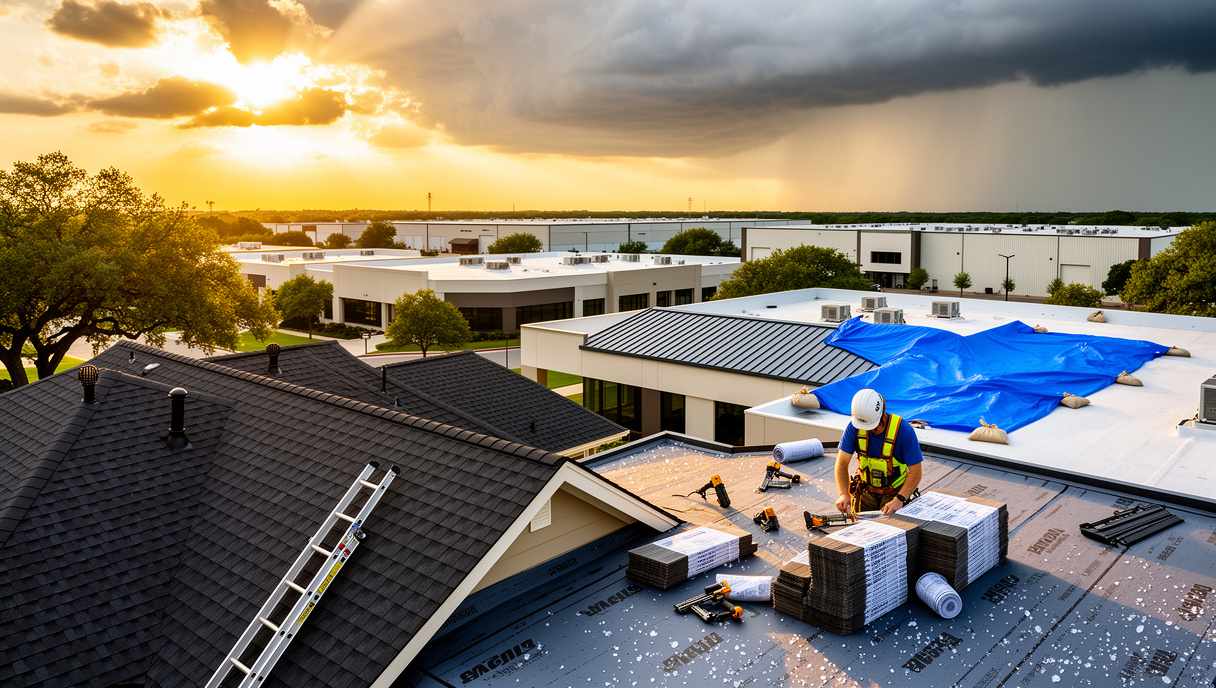
Consider a typical spring hail event in Cedar Park. A thorough inspection finds granule loss, bruised shingles, and dented metal accessories. Your contractor immediately installs a protective tarp over compromised slopes to prevent interior damage. Next comes detailed photo documentation for your insurer, followed by a clear replacement proposal that meets code and manufacturer specs. With materials selected—say, Class 4 shingles, high-temp underlayment, upgraded vents, and fresh flashing—the crew stages the site, protects landscaping, and completes the tear-off and install with proper nail patterns and sealed penetrations. Final cleanup includes magnet sweeps for fasteners and a walk-through so you know how to register warranties and maintain your new system.
Commercial property managers face different challenges. A retail building in Round Rock might experience chronic ponding near rooftop HVAC units, leading to seam failures and interior staining. An experienced team tests moisture content in the insulation, repairs wet areas, and designs a tapered system to improve drainage. They may specify a thicker TPO or PVC membrane, reinforced at high-traffic paths, with new curbs and pitch pans sealed to manufacturer standards. The result is fewer leak calls, better energy performance thanks to a cool membrane, and simplified maintenance plans that document each inspection before and after storm season—critical for budgeting and longevity.
Preventive care pays off for homeowners, too. Ahead of summer, a seasonal tune-up in Leander might include sealing minor nail pops, replacing cracked pipe boots, resecuring loose flashing, and clearing debris at valleys and gutters. In older homes, adding intake vents and a continuous ridge vent can lower attic temperatures, protecting shingles and reducing cooling loads. During roof replacements, a conscientious crew evaluates the deck for rot, upgrades underlayment, and improves flashing at chimneys and skylights to stop recurring leaks. Whether it’s a small roof repair after a wind gust, a full roof replacement timed around HOA colors, or emergency dry-in services after a midnight storm, a seasoned Cedar Park partner keeps you informed at every step and delivers workmanship that holds up when the weather swings wild.

Karachi-born, Doha-based climate-policy nerd who writes about desalination tech, Arabic calligraphy fonts, and the sociology of esports fandoms. She kickboxes at dawn, volunteers for beach cleanups, and brews cardamom cold brew for the office.