In communal and district heating, the performance of a home’s heating and hot water often comes down to one component: the heat interface unit (HIU). When that unit is expertly selected, installed, set up, and maintained, residents enjoy consistent hot water, responsive heating, and lower energy bills. When it isn’t, they face temperature spikes, slow warm-up times, noisy pipework, and escalating operating costs. That’s where a dedicated HIU specialist makes the difference—bringing the diagnostic experience, parts knowledge, and commissioning skills needed to keep modern heat networks efficient and reliable across London’s diverse housing stock, from new-build apartment towers to converted period blocks.
What a HIU Specialist Does and Why It Matters
A HIU is the bridge between a building’s central plant and each dwelling’s taps and radiators. On a communal heat network, primary hot water circulates from the plantroom to each apartment, where the HIU transfers heat on demand to the property’s domestic hot water and space heating circuits. There are two broad types: indirect HIUs, which use a plate heat exchanger to keep primary and secondary water separate, and direct HIUs, which feed primary water directly to the heating circuit. In either case, optimal performance depends on precise control of flow, pressure, and temperature differentials.
A seasoned HIU specialist understands how components interact under real-world loads: differential pressure control valves, thermostatic mixing valves, motorised actuators, temperature sensors, strainers, filters, and the plate heat exchanger at the heart of the unit. They recognise the customer-side symptoms—lukewarm showers during peak hours, radiators slow to heat, hot water overshoot—then trace them back to root causes such as fouled strainers, scaled plate heat exchangers (a frequent issue in hard-water areas like London), drifting control valves, or incorrect commissioning setpoints. Beyond troubleshooting, they optimise the system to lower return temperatures and improve delta-T, which directly cuts plant energy consumption and reduces wear on pumps and boilers or heat pumps.
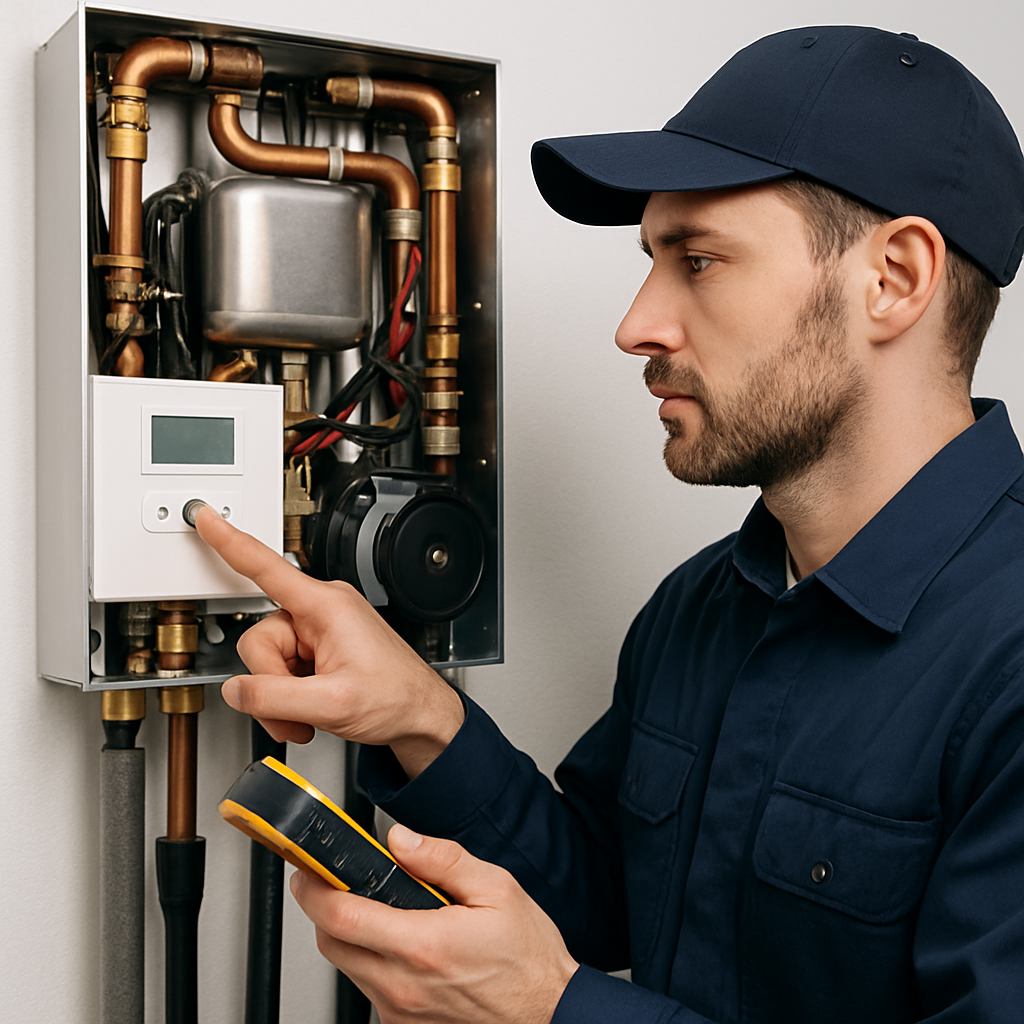
Why not call a general plumber? While many can swap a valve or clean a strainer, HIUs demand network-aware diagnostics. Changes at one dwelling can affect an entire riser if differential pressures aren’t controlled. Professional HIU experts work with instruments designed for heat networks: digital thermometers for live delta-T checks, manometers for verifying set pressures, ultrasonic flow meters for instantaneous flow/energy readings, and thermal imaging for quick identification of imbalances. That translates into more accurate fault-finding, fewer callbacks, and measurable efficiency gains across the site.
Specialist attention also safeguards compliance and longevity. Properly maintained HIUs support CP1-aligned best practice for heat networks, help protect metering accuracy, and reduce nuisance issues that strain landlord-tenant relationships. In short, choosing a HIU specialist means more consistent comfort for occupants, lower running costs for freeholders and managing agents, and a network that behaves as engineered.
HIU Servicing, Repairs, and Upgrades: Proven Methods that Reduce Costs
Routine servicing is the cornerstone of HIU reliability. A comprehensive service typically includes cleaning and inspecting strainers and dirt separators; checking and, if necessary, descaling the plate heat exchanger; verifying operation and calibration of thermostatic mixing valves; testing actuators and control valves; confirming correct setpoints for domestic hot water and heating; and measuring primary/secondary pressures and temperatures to validate delta-T performance. The outcome is a HIU restored to design efficiency, with clear records that benchmark future performance.
London’s hard water presents a particular challenge. Limescale accumulates on plate heat exchanger surfaces, acting as insulation that forces higher primary flow and temperature to deliver the same hot water, driving up energy consumption and increasing return temperatures. Powerflushing and targeted descaling restore heat transfer efficiency, while chemical inhibitors and on-unit filters keep sludge and magnetite at bay. Where recurring fouling is documented, a specialist may recommend upgrades such as enhanced filtration, magnetic dirt separators, or pre-emptive water treatment to extend service life and maintain system balance.
When breakdowns occur—no hot water, intermittent heating, or pressure-related lockouts—rapid, accurate diagnosis saves both time and money. A HIU-trained engineer isolates the fault path in minutes: is the problem supply-side (primary flow/pressure, blocked strainer) or unit-side (failed actuator, sensor drift, TMV cartridge wear)? By carrying common spares and understanding brand-specific nuances, they complete first-time fixes more often, cutting disruption for residents and avoiding escalations that can destabilise the wider network.
Optimisation is where long-term savings are unlocked. Fine-tuning control strategies, balancing flows across dwellings, and lowering return temperatures can reduce central plant fuel use and carbon emissions. Even seemingly small adjustments—like restoring correct differential pressure across a HIU or re-commissioning after radiator changes—can yield a notable drop in kWh/m². For landlords and property managers, scheduled preventive maintenance programs reduce emergency callouts, improve tenant satisfaction, and uphold warranty conditions. The recommended cadence is typically annual servicing for most HIUs, with more frequent checks in high-demand or scale-prone buildings.
Upgrades also play a role in lifecycle value. Older HIUs may benefit from modern control packages, improved sensors, or replacement plate heat exchangers with better turbulence characteristics for enhanced heat transfer. Where metering is present, a specialist verifies sensor placement and readings to help maintain accurate billing. By combining servicing, rapid repairs, and strategic upgrades, a dedicated HIU expert keeps total cost of ownership predictable and as low as practical.
Real-World London Scenarios and How a HIU Specialist Solves Them
Every London building presents unique constraints—fabric, occupancy, and plant design—so practical, site-specific solutions matter. Consider a riverside apartment block experiencing morning hot water dips. Residents reported lukewarm showers during peak times. A site survey found partially blocked primary strainers at multiple HIUs and a small but significant drift in several thermostatic mixing valves. After cleaning, recalibration, and descaling of the worst-affected plate heat exchangers, domestic hot water recovered to stable, on-setpoint delivery. Importantly, average return temperatures dropped by several degrees, easing load on the central plant during peaks.
In a Victorian conversion in Islington, persistent radiator noise and uneven heating plagued the top-floor flats. The root cause wasn’t the radiators, but variable differential pressures at the HIUs due to riser balancing issues and one malfunctioning differential pressure control valve. A HIU specialist rebalanced the risers, replaced the faulty valve, cleaned strainers, and recommissioned setpoints across the affected units. Results included quieter operation and faster warm-up, with subsequent monitoring showing improved delta-T and lower pump energy use.
Another case in Canary Wharf involved a series of HIUs where the metered heat consumption had been creeping up month-on-month without any reported comfort issues. Data analysis suggested deteriorating heat exchanger performance. Targeted inspections confirmed scale accumulation and microfouling. A programmed round of descaling and powerflushing, combined with dosing inhibitors and upgrading to high-capacity magnetic filtration on select units, reversed the trend. The site’s plant manager recorded a measurable reduction in primary energy demand while maintaining tenant comfort, demonstrating the value of proactive maintenance over reactive fixes.
Portfolio landlords and managing agents across boroughs such as Camden, Hackney, Southwark, and Westminster face added complexity: coordinating access, maintaining service logs across dozens or hundreds of units, and ensuring consistent outcomes regardless of HIU brand. A dedicated partner standardises servicing protocols, keeps digital records of setpoints and measured parameters, and forecasts component replacement cycles before failures occur. For residents, that translates into fewer surprise outages; for asset owners, it protects reputation and budget.
London’s water hardness, high occupancy turnover, and mixed-age building stock make a compelling case for choosing an experienced HIU specialist. Whether it’s fast response to no-hot-water emergencies, thorough annual servicing, or long-term optimisation that trims return temperatures and energy bills, specialist engineers bring the tools, techniques, and local know-how to keep heat networks performing as intended. From new-build apartments in Battersea to heritage conversions in Kensington and Chelsea, the right expertise ensures consistent comfort today while safeguarding system efficiency for years to come.

Karachi-born, Doha-based climate-policy nerd who writes about desalination tech, Arabic calligraphy fonts, and the sociology of esports fandoms. She kickboxes at dawn, volunteers for beach cleanups, and brews cardamom cold brew for the office.