Every vehicle wash bay, equipment pad, and rinse station produces more than just foam and shine—it creates a complex wastewater stream loaded with sediment, oils, detergents, heavy metals, rubber fines, road salts, and organic debris. Left unmanaged, that runoff becomes a risk vector for violations, insurance exposure, and accelerated equipment wear. An effective strategy for wash water filtration turns a messy liability into a controlled, repeatable process that safeguards compliance, protects downstream infrastructure, and recovers water for reuse. Whether you operate a municipal yard, a construction fleet, a refuse facility, or a contractor rig, the right filtration approach is the key to cleaning responsibly without driving up operating costs.
What’s Really in Your Wash Water—and Why Filtration Matters
Vehicle and equipment washing releases a diverse mix of contaminants into rinse water. Grit and fines from undercarriages, clays and soils from off-road work, and metal shavings from brake assemblies create high total suspended solids. Hydrocarbons, lubricants, and fuel residues raise oil and grease levels. Detergents can push pH outside acceptable ranges and carry surfactants that keep oils emulsified. In colder climates, road salt and brine elevate conductivity and chloride concentrations. Street sweepers and refuse trucks contribute organics and microbial loads. Each of these constituents influences how your wash water filtration system must be configured to perform reliably day in and day out.
From a regulatory perspective, the U.S. Clean Water Act and related NPDES stormwater frameworks don’t distinguish between a small yard and a giant depot; if contaminated runoff enters soil or storm drains, it can create enforceable violations. Local pretreatment ordinances also restrict what can go to sanitary sewer, with typical limits on TSS, oil and grease, and pH, plus possible restrictions on metals like copper, zinc, and lead. Even when enforcement isn’t top of mind, poor filtration shows up in day-to-day operations: clogged trench drains, pumps choked with sludge, sheen on sump pits, foul odors, slippery floors, icing hazards in winter, and premature corrosion of assets exposed to recycled salty rinse water.
Effective wash water filtration builds a process train that captures, separates, and polishes wastewater before discharge or reuse. At a minimum, that means physically removing heavy solids so they can be dewatered and hauled economically, separating free oils to protect pumps and downstream filters, and finishing with media that pulls out fine particulates and detergents for consistent clarity. As a practical example, a municipal street-sweeper facility that upgraded from a simple sump to a staged system—grit settling, coalescing oil separation, and multimedia polishing—saw fewer pump failures and reduced hydrant water demand by recirculating a portion of treated rinse. Likewise, a construction rental yard that introduced pH control and bag filtration brought its discharge within permit limits while cutting man-hours spent cleaning plugged drains. The common thread is a system designed around the specific contaminant loads, flow rates, and compliance targets of the operation.
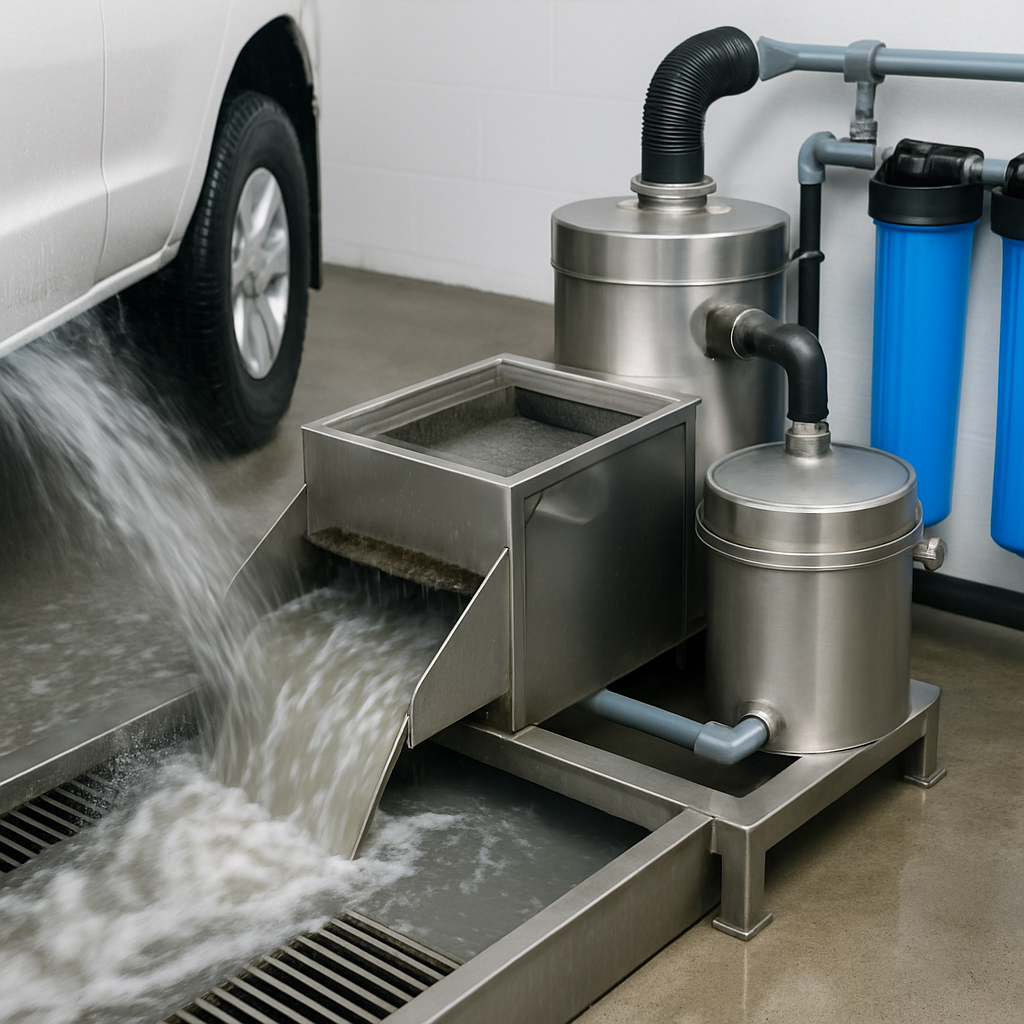
Inside the System: Core Components That Make Wash Water Filtration Work
A reliable filtration setup starts where water hits the ground. Collection and containment are foundational: sloped concrete or steel wash pads, berms, grated trenches, and sumps keep runoff out of soils and storm drains. Good hydraulics—adequate pitch, debris screens, and accessible cleanouts—reduce maintenance. From there, solids management does the heavy lifting. Settling pits and trench sumps capture dense grit; optional hydrocyclones accelerate sand removal; scraper conveyors and sludge hoppers simplify dewatering. Removing as much TSS as possible early lowers life-cycle costs by protecting every downstream component.
Next comes oil control. A properly sized oil-water separator with coalescing media captures free and dispersed hydrocarbons before they reach pumps and filters. When surfactants keep oils emulsified, upstream chemistry—flocculants or coagulants—may be dosed in a mix tank to “break” emulsions and bind fines into larger, settleable particles. Many facilities pair chemical assist with lamella clarifiers to achieve consistent solids capture at compact footprints, especially where space is tight.
Polishing brings the water to its performance target. Bag or cartridge filters handle fine particulates and provide an easily serviced barrier with measurable pressure drop cues for change-out. Multimedia vessels (sand, anthracite, garnet) improve throughput and longevity when influent solids fluctuate. Activated carbon helps remove surfactants, odors, and trace organics that can cause foam in reclaim loops. In reuse applications, disinfection—UV or low-dose oxidants—controls microbial growth that would otherwise produce slime, odors, and biofouling in tanks and spray nozzles. If the water is destined for sewer, pH control (acid or caustic dosing) keeps discharge within ordinance, typically pH 5–11 or tighter, depending on locality.
Pumps, controls, and safeguards tie the system together. Level switches protect against dry-run damage; differential pressure gauges indicate filter loading; conductivity sensors help monitor salt carryover in winter rinse water. Seasonal considerations matter: heat tracing and insulated lines prevent freeze-ups; covered pads or canopies limit stormwater intrusion that could overwhelm treatment capacity. Well-labeled piping and quick-disconnects make maintenance faster and safer. The most resilient systems favor robust, cleanable components over exotic consumables, because easy serviceability keeps uptime high and total cost in check.
Selecting, Sizing, and Operating for Compliance and ROI
Right-sizing begins with a candid assessment of how you wash. What’s the mix of vehicles—light-duty pickups, refuse packers, articulated loaders, street sweepers? How many washes per shift? What is the soil load—gritty, greasy, silty, or salty? Is your discharge path a sanitary sewer under pretreatment rules, a zero-discharge closed loop, or a batch haul-off scenario? The answers drive capacity requirements (gallons per minute and holding volume), solids handling provisions, and polishing stages. As a rule of thumb, aim for sump and clarifier volume that smooths peak flows, and choose a filtration line that can comfortably handle your sustained washing rate with at least 20–30% headroom for surges and fouled media.
Compliance targets set the bar. Many facilities seek TSS below 100–150 mg/L and oil and grease below 50 mg/L for sewer discharge, though local limits vary. For reuse loops, “functional clarity” is the goal—water that won’t plug nozzles, corrode components, or streak finishes. Monitoring simple KPIs pays off: differential pressure across filters (change-out trigger), turbidity or particle counts for clarity, conductivity to track salt carryover, and periodic lab checks for oil and grease. Training wash crews to keep solids where they belong—knocking off mud before entering the bay, using appropriate detergent dilutions—lowers loading and extends filter life.
Consider three common scenarios. A municipal sweeper barn faces extreme grit. The winning design emphasizes oversized trenching, a multi-compartment sump with easy skid-steer cleanout, a scraper conveyor to dewater fines, a coalescing separator, and rugged multimedia filtration. With that train, the site can recycle a portion of water safely and deliver consistent sewer discharge for the remainder. A winter-road fleet battling brine needs corrosion control: frequent undercarriage rinses, conductivity monitoring, robust solids capture, and periodic purge of high-salt reclaim water to keep dissolved solids in check. In contrast, a mobile contractor washing at customer sites relies on portable berms, a trailer-mounted pump-and-separator skid, and staged bag filtration to prevent offsite releases and meet job-specific requirements without permanent infrastructure.
Total cost of ownership beats sticker price. Durable pads and trenches reduce reactive cleanouts. Effective solids removal slashes filter spend and pump failures. Oil capture protects membranes and carbon beds. Smart controls and gauges prevent over-servicing and catch problems before downtime escalates. Water and sewer savings from reuse can be substantial, especially where rates are high; even partial reclaim often justifies the equipment. Sludge management also matters: plan for dewatering and convenient access so hauling is safe, compliant, and infrequent. With the right design, wash water filtration becomes a predictable utility—one that keeps you on the right side of permits while protecting assets, labor hours, and the environment.

Karachi-born, Doha-based climate-policy nerd who writes about desalination tech, Arabic calligraphy fonts, and the sociology of esports fandoms. She kickboxes at dawn, volunteers for beach cleanups, and brews cardamom cold brew for the office.